



Fleet Vehicle Service and Repair Best Practices for Uptime and Safety near Aurora, IL
Countryside Mitsubishi – Fleet Vehicle Service and Repair Best Practices for Uptime and Safety near Aurora, IL
Fleet vehicles are the backbone of a lot of local businesses, from last-mile delivery and mobile trades to sales teams covering the western suburbs. Keeping those vehicles reliable is not just a maintenance task — it is an operations strategy. When your vans, SUVs, and light-duty pickups are healthy, you protect schedules, safeguard teams, and keep customers happy. This guide breaks down a practical, local-first approach to fleet service and repair that helps you maximize uptime and control total cost of ownership.
We will walk through how to build a preventive maintenance plan that fits real driving patterns, which repairs to anticipate in higher-mileage use, and simple processes that reduce surprises. The goal is clarity and consistency — so every vehicle in your roster receives the right care at the right time, with documentation you can trust.
The local driving reality for Aurora-area fleets
Fleet wear is rarely random — it follows your routes. Around Aurora, frequent stop-and-go on Route 59’s retail corridor, steady cruising on I-88, and repeated curbside stops in business parks all shape what fails first. Short-hop routes with idling and frequent key cycles add stress to starters, batteries, and cooling systems. Higher-speed tollway stretches magnify the impact of alignment and tire health. Repeated contacts with curbs at docks and tight-turn parking lots can nudge suspension and steering angles out of spec long before a driver notices a pull on the wheel.
Rail crossings and older pavement in industrial areas can accelerate bushing and shock wear. Freeze-thaw cycles contribute to potholes that impact wheels, tires, and alignment. None of this is unusual — it simply means your PM plan should reflect Aurora’s mix of congestion, curb work, and tollway miles.
A maintenance framework that fits your routes
Think in three dimensions: miles, engine hours, and calendar time. City-delivery vans may rack up hours without miles; sales SUVs may accumulate miles quickly with fewer starts. Tying service to whichever measure comes first (miles, hours, or months) keeps every unit on track. If you run telematics, pull engine-hour data to sharpen intervals and confirm idling patterns.
- Oil and filters: Set intervals by duty cycle — heavy idling or short trips usually need shorter oil-change windows.
- Brakes: Inspect pad thickness and rotor condition at every tire rotation; document measurements to predict replacement windows.
- Tires and alignment: Rotate on a firm schedule and perform alignments whenever you see edge wear or after curb impacts.
- Steering and suspension: Check ball joints, tie-rod ends, control-arm bushings, and struts/shocks to maintain stable handling and even tire wear.
- Fluids and cooling: Monitor coolant condition, hoses, clamps, and fans — idling and low-speed work add thermal load.
- Batteries and charging: Test voltage and charging output, especially on vehicles with added inverters, lighting, or upfit electronics.
- HVAC performance: Verify A/C performance for driver comfort and defogging safety during high-utilization months.
- Lighting and wipers: Replace proactively to protect visibility on pre-dawn and after-dark routes.
- Safety systems calibration: After windshield or collision repairs, confirm ADAS camera and radar calibration is completed.
Standardize parts choices and document every PM event. OEM or OEM-equivalent components, used consistently across similar models, simplify records and reduce variability in how your vehicles age.
Reduce downtime with smart scheduling
Uptime is a scheduling discipline. Stagger PM visits so you never pull too many units at once. Batch similar services to speed approvals and parts pulls. Reserve routine maintenance windows ahead of peak business periods, and build a same-day diagnosis rule for any unexpected lights on the dashboard. A simple approval workflow — who says yes to what dollar amount — keeps repairs moving without back-and-forth delays.
- Standardize RO approvals: Pre-authorize common PM menus and a dollar threshold for additional findings.
- Stock fast-movers: Keep filters, wipers, bulbs, and tire sizes you use most on hand or in a labeled bin per vehicle.
- Create driver checklists: Daily walkarounds catch tire cuts, glass chips, and lamp outages before routes go live.
- Capture data: Log pad thickness, tread depth, battery test results, and alignment specs to forecast replacements.
At Countryside Mitsubishi, we support fleets with factory-trained technicians, genuine OEM parts, streamlined online scheduling, and available loaner vehicles for larger repairs — all designed to keep your team on the road with minimal disruption.
Repairs you can expect in high-usage fleets
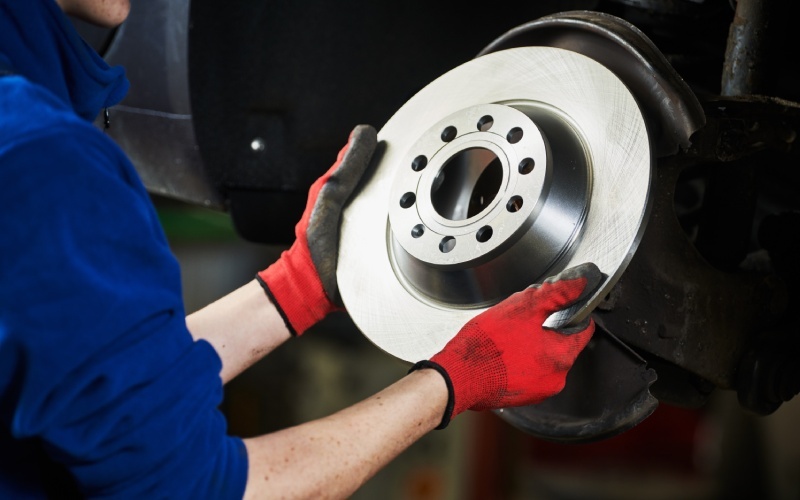
Brakes lead the list for stop-and-go fleets. Expect more frequent pad and, at times, rotor replacement if routes involve heavy loads, hills, or dense traffic. If a vehicle vibrates during braking or pulls to one side, address it promptly to avoid compounding wear on calipers or steering components.
Tires and alignment go hand-in-hand. Edge wear, feathering, or steering-wheel off-center are red flags. Curbs and dock work can nudge alignment out of spec long before a driver notices a pull — quick checks during rotations add real tire life. Keep rotation patterns consistent across your roster and log tread-depth by position.
Cooling system upkeep protects engines that idle to power HVAC or equipment. Hoses, belts, tensioners, and electric fan performance deserve attention. Watch for seepage at hose ends, chalky residue around connections, or coolant that has shifted color — all signs it is time to service.
Transmission and driveline services are pure longevity plays. Fluid services on schedule, plus inspections for leaks at pans and seals, lower the risk of heat-related wear. If you hear clunks on shifts or binding at low speeds, do not wait — early intervention costs less.
Body and glass repairs are part of fleet life. Windshield chips from tollway debris are less expensive to fix when caught early. Minor cosmetic repairs keep vehicles on-brand and can protect resale value when you rotate units out of service.
Compliance, records, and KPIs that matter
Keep inspection logs current, attach invoices to each VIN, and store calibration certificates after any safety-system work. Clean records support warranty decisions, simplify audits, and make downstream resale easier. A few simple KPIs give you a fast read on fleet health.
- Uptime percentage: Days available divided by total days — your north-star metric for service effectiveness.
- Cost per mile: Total maintenance and repair spend divided by miles — flags outliers by unit or model.
- PM compliance rate: On-time preventive tasks divided by scheduled tasks — shows whether the plan is being followed.
- Repeat repair rate: Returns for the same concern within 90 days — spot quality gaps early.
- Tire cost per 1,000 miles: Normalizes tire spend across routes with different mileage.
Review trends quarterly. If brake pad life is consistently short on certain routes, consider interval tweaks, driver coaching on following distance, or part-spec changes. If a few units drive most of your unscheduled downtime, prioritize deeper inspections on those vehicles.
A sample 90-day PM cycle for mixed-use light-duty fleets
- Every 5,000-7,500 miles or 250 hours: Engine oil and filter, tire rotation, multipoint inspection, brake measurements, fluid top-offs.
- Every 10,000-15,000 miles: Cabin and engine air filters, alignment check if tire wear suggests it, battery test with printout.
- Every 20,000-30,000 miles: Brake service as measured, cooling-system inspection with coolant condition test, transmission inspection for leaks and fluid condition.
- Annually: Comprehensive inspection of suspension and steering, HVAC performance and refrigerant leak check, ADAS camera/radar inspection if glass or bodywork occurred.
- At each fuel stop: Driver walkaround — lights, tires, glass, wipers, leaks under the vehicle, and any new noises or vibrations.
Use this as a starting template, then tailor by model, payload, and route profile. The key is consistency — the more uniform your process, the fewer surprises you see on the road.
Frequently Asked Questions:
What qualifies as a fleet, and do you service mixed makes?
Many businesses consider two or more vehicles a fleet, and even a single high-mileage work vehicle benefits from a structured PM plan. We service all makes and models, so you can maintain your roster through one trusted service partner.
How do engine hours factor into maintenance?
Hours capture wear that miles miss — especially with idling and short-trip routes. If a van accrues high hours with modest miles, set PM triggers by hours or calendar time to protect oil life, batteries, and cooling components.
Can you complete same-day maintenance for multiple vehicles?
Many routine services can be completed the same day with scheduled appointments and pre-authorized menus. For larger repairs that require more time, we can provide loaner vehicles to help your team stay productive.
Do you use OEM parts, and is work documented for warranty records?
Yes — our team installs genuine OEM parts where specified and provides detailed invoices tied to each VIN. That documentation supports warranty needs and simplifies future resale.
Can you coordinate collision and glass repairs for fleet vehicles?
Yes — we can facilitate body and paint work, bumper and panel repairs, and windshield replacement or chip repair, along with post-repair safety-system checks as needed.
Do you service EVs and plug-in hybrids in fleet applications?
Yes — we maintain EVs and PHEVs, including tire care, brake service (with attention to regenerative-braking systems), cabin filters, and software-related checks consistent with manufacturer guidance.
Solid fleet service is not about guessing — it is about building a practical, local plan and sticking to it. If you are organizing maintenance for a growing roster of vehicles near Aurora, IL, our team is ready to help you streamline scheduling, standardize parts, and keep your drivers moving with confidence.
0 comment(s) so far on Fleet Vehicle Service and Repair Best Practices for Uptime and Safety near Aurora, IL